

By Shravani Prakash
The global trend of population aging is reflected in India. With an elderly population projected to increase from 138 million in 2021 to 319 million or 19.5% of the population by 2050; eldercare is becoming a pressing social and economic issue.
The burden of eldercare in families often falls disproportionately on women, adding to their professional responsibilities, personal lives, and mental well-being. According to data from various global studies, over 70% of primary caregivers for the elderly are women, often managing their careers and households simultaneously. A survey on ‘Role of Family in Caregiving’ by HelpAge India in June 2019 across 20 cities, showed that female caregivers (usually the daughter or the daughter-in-law) outnumbered men when it came to providing physical care for activities of daily living (ADL) for elders.
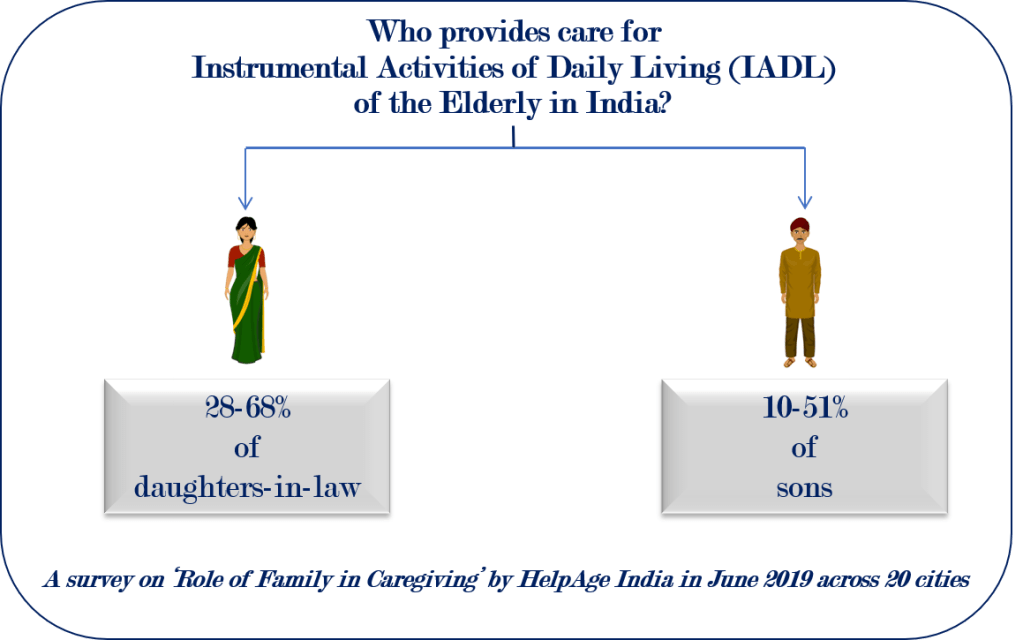
This burden of eldercare on women, which makes up a large proportion of their overall unpaid care burden, affects them financial security, career advancement, and mental health. While the Government of India has put in place some programs to enable senior citizens in India, these do not address the burden of care on the younger generations. Therefore, it is to essential enforce measures to alleviate the eldercare burden on women in India. Following are some suggestions.
Interventions that can reduce women’s eldercare burden
Expand Access to Professional Eldercare Services – Professional eldercare services are underdeveloped in India, where care tends to rely heavily on family members, especially women. There has been a lack of focus on building affordable elderly in India, which is critical in the face of a rapidly aging population and growth in nuclear families due to urbanization and migration. Increasing access to affordable professional services such as home-based caregivers, assisted living, and adult daycare facilities can relieve women of these duties. Government tax benefits, subsidies, and voucher programs could make eldercare services more affordable. Moreover, training and fair compensation for caregivers will improve the quality of eldercare and reduce reliance on informal family support.
The recent spurt in elder care startups and increased funding in Indian elder care companies ($23.8 million in 2023) is a promising trend. New-age companies such as SeniorWorld, Emoha, GenWise, 60Plus India, Alserv, ElderAid Wellness, and GoodFellows are providing a range of tech and non-tech services for long-term senior care. Further investments for the emergence and scale of such straups must be encouraged.
Introduce Flexible Work Policies for Everyone – Flexible work policies are essential to support employees juggling caregiving and professional obligations. Options such as remote work, flexible hours, and eldercare leave are necessary to allow women and men to manage caregiving alongside work. Supportive policies, such as paid family leave, job-sharing programs, or part-time roles, create a more productive work environment where caregivers feel acknowledged and supported.
Leverage Technology to Support Eldercare – Technology can simplify eldercare by providing tools for health monitoring, scheduling, and remote care. Telemedicine, wearable health devices, and health management apps enable caregivers to stay updated on their loved ones’ well-being, particularly helpful in remote caregiving. Video calling applications can facilitate frequent check-ins and create peace of mind for families who may be geographically separated from the elderly family members they care for.
Build Community Support Networks – Community support networks play an invaluable role in eldercare. Social organizations and community-based programs provide logistical and emotional support, from offering respite care to organizing caregiver support groups. These networks ease isolation, provide caregiving guidance, and create a support system for families. For women shouldering caregiving duties, such networks offer necessary respite and support.
Implement Gender-Sensitive Policy Interventions – Policy interventions that recognize unpaid caregiving labor, especially among women, are critical. Governments can provide financial assistance, retirement benefits, and tax reliefs specifically for caregivers. A robust public healthcare system with subsidized eldercare services reduces informal caregiving dependence and empowers women to balance caregiving with other responsibilities.
Financial Empowerment and Inclusion of the Elderly – A significant portion of the elderly population remains dependent on children due to lack of sufficient retirement savings and pension schemes as well as minimal health insurance coverage among the elderly. While the government has launched programs like the National Programme for Health Care of the Elderly (NPHCE), the reach and effectiveness of these initiatives are often hampered by inadequate funding, poor implementation, and lack of awareness among the target population.
Financial independence is crucial for the elderly to reduce dependency on family members. Specific actions include expanding public funds, infrastructure, and mandatory savings plans. Mechanisms like reverse mortgages increase liquidity for seniors, enabling self-sufficiency. Additionally, tax reforms on senior care products, insurance options for elderly health coverage, and financial literacy programs prevent financial exploitation and abuse.
Bridge Digital Inclusion Gaps – Digital inclusion for seniors can simplify eldercare processes. Making digital devices affordable, promoting digital literacy, and utilizing technology to streamline eldercare access are essential for ensuring that the elderly can remain engaged and independent. Digital access further supports caregivers in coordinating care and accessing health services.
In summary, reducing the eldercare burden on women in India requires comprehensive efforts across family structures, government policies, employer support, and technological innovation. These interventions must makecaregiving as a family responsibility, not just the duty of women. Encouraging shared caregiving promotes equity, relieves stress from any one person, and strengthens family bonds. By distributing caregiving responsibilities more equitably, we can create a society where women can lead balanced, empowered lives.
 Ellenomics