
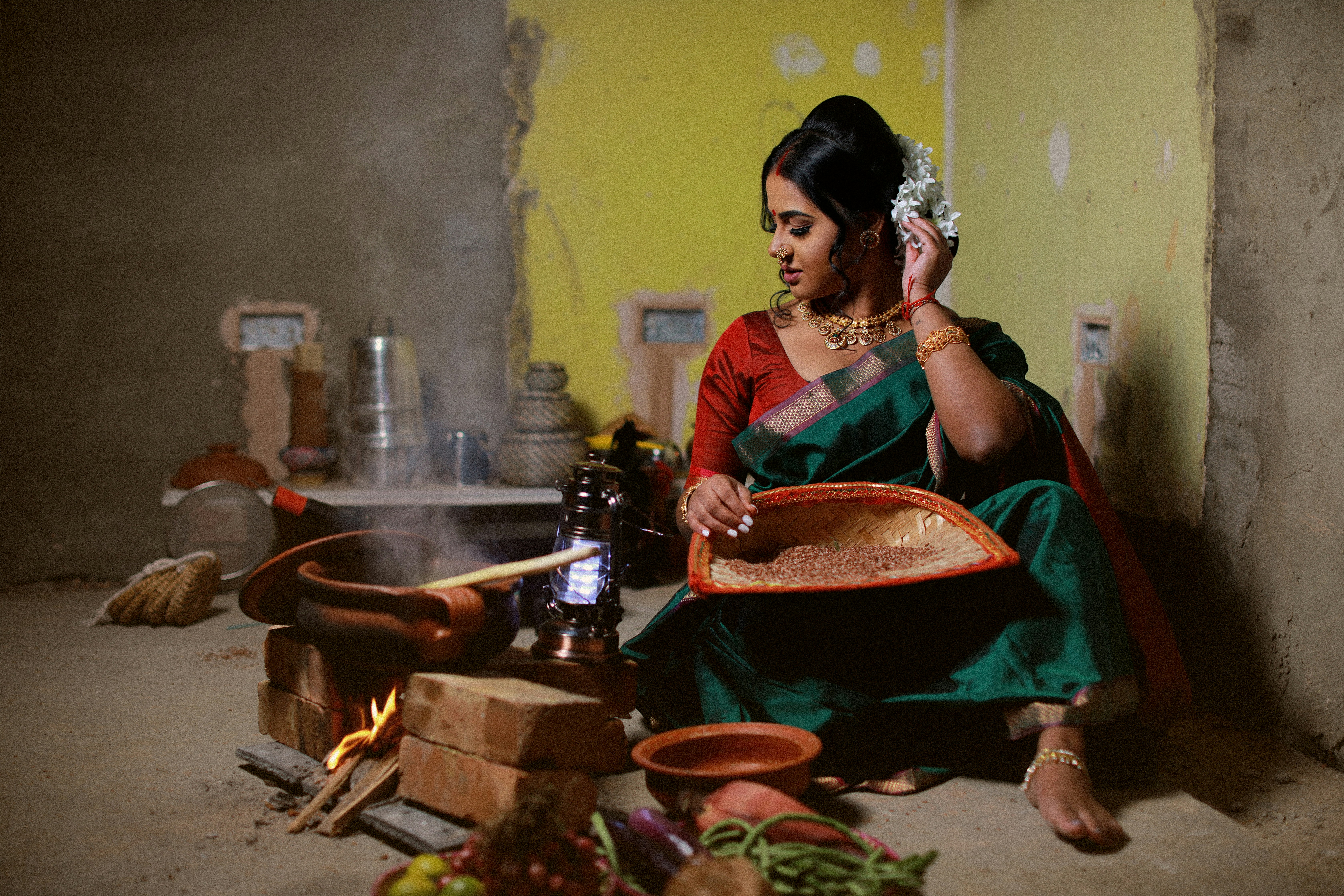
A recent report my colleagues and I authored on India’s changing #female #labourforce participation highlights significant paradoxes, that while more women are entering paid work, their agency and choices have not improved commensurately. Especially striking is the fact that women continue to spend more than 3.5 times as much time as men on #unpaid domestic and #care work, much of it routine tasks such as cooking and cleaning. More concerningly, this gap has widened over the past five years. Taking up paid work does little to ease women’s domestic responsibilities. Unlike men, women continue to spend nearly the same amount of time on unpaid work, often fitting paid employment around an already demanding domestic schedule. The additional hours come largely at the expense of their personal time, rest and self-care. India’s unpaid work gap also remains among the widest internationally.
These findings raise a larger question: why are these patterns so persistent? The answer lies largely in structural constraints — entrenched #gendernorms, the unequal expectation that women will meet the family’s needs, and inadequate public and institutional support for care.
But I have increasingly wondered whether we also need to look more closely at the role of customs and traditions, and at how women themselves are socialised into accepting, sustaining and sometimes even defending these unequal expectations. This is not to place the responsibility for change on women. Rather, it is to understand why the redistribution of unpaid work remains so difficult, even as women’s roles outside the home change.
The festive season of the past few weeks offers a useful lens. It is a period when the gendered allocation of time and labour within Indian households becomes especially visible. Consider what it typically involves for women. Navratri means nine days of preparing separate fasting and non-fasting meals for family members, sometimes all night. Karva Chauth involves a day-long fast without food or water, during which many women still spend three to four hours cooking for the evening’s offerings and for the rest of the family. Diwali brings weeks of deep cleaning of the home, followed by cooking, hosting and clearing up after guests. Chhath Puja can involve fasts of over 36 hours and physically demanding rituals, like staying in flowing water for a full night. And these are only the visible activities. There is also the shopping, the preparation of special foods, serving for the guests, the childcare and the constant coordination that happens behind the scenes.
Imagine what the female time-use diary would look like during these weeks. How much is spent meeting expectations around everyone else’s? And this is not a one-off. In many households, similar observances recur through the year, adding up to the substantial and recurring claim on women’s time.
Why do women continue to take up these burdens?
It is easy to attribute all of this to patriarchy, social norms and the unequal distribution of household responsibilities. All of these matter.
But I have observed that there are many other layers to the story:
There is guilt, the fear that not observing a fast or performing a ritual or breaking a tradition may somehow bring misfortune to one’s husband or children.
There is social conditioning, the belief that a good wife, mother or daughter-in-law is one who does not question these expectations.
There is the fear of judgement and ostracism. The discomfort of being the only woman in the family or community who chooses not to participate.
There is also sacrifice, often celebrated as a virtue in Indian womanhood. The idea that a woman’s love is best demonstrated by how much she is willing to endure for her family.
And perhaps there is also a form of soft power. Women derive recognition, identity and influence from being the ones who preserve family traditions, organise celebrations and undertake acts of devotion. Their labour may be taken for granted on ordinary days, but during festivals it can become a source of appreciation and moral authority.
Yet, this recognition comes at a cost. Women can become so invested in fulfilling these roles that stepping away from them feels like letting down their families, their communities and even their faith.
The chain must break — and it is women who must help break it!
To address the skewed time-use patterns on women, the ecosystem needs to change, of course. Men must share domestic and care responsibilities, not merely offer occasional assistance. Employers must recognise the additional pressures of care and family responsibilities. Governments must invest in public services and care infrastructure. Technology can help reduce the drudgery of domestic work.
But I also believe women have an important role in changing this narrative. Not because they are responsible for the inequality, but because they can be powerful agents in breaking the expectations that keep it going and create positive #multiplier impacts on other women’s lives.
A few things that could make a difference:
· First, rethink sacrifice as a measure of love. A woman’s fasting, exhaustion or physical suffering does not determine the longevity of her husband’s life or the well-being of her children. What contributes to a family’s well-being is having healthy, happy and rested members, including the women who hold it together. Ensuring that everyone eats nutritious food, stays hydrated and gets adequate rest throughout the year matters far more than one person’s sacrifice on a particular day.
· Second, stop making other women pay the price of tradition. Women must not pressurise, shame or ostracise those who choose not to fast, cannot observe rituals for health reasons, or simply wish to do things differently. Mothers-in-law, mothers, sisters and daughters have an especially important role here. The chain cannot break if women continue to police one another.
· Third, reclaim the meaning of rituals. If you enjoy dressing up, decorating the home, preparing festive food or offering prayers, do it. But do it because it brings you joy, faith and a sense of connection — not because you fear the consequences of not doing it. A prayer should bring peace, not become another task on an already overflowing to-do list. Traditions can be adapted. They need not be abandoned, but they should not come at the cost of women’s health and agency.
· Fourth, let go of guilt. It is okay to buy the sweets rather than make them. It is okay to have a simpler Diwali cleaning routine. It is okay to order food, share the cooking or leave some things undone. A home does not have to be spotless for Goddess Lakshmi to visit. Nor is a woman’s worth measured by how much she cooks, cleans or sacrifices.
· Finally, recognise your worth beyond what you do for others. Women do not have to work themselves to exhaustion to earn a position in their families. They should be valued for who they are, not just for what they do. This also means building identities, interests, economic resources and sources of fulfilment beyond domestic responsibilities.
A small but hopeful trend is already emerging
One encouraging development I have noticed is the growing number of ordinary women using social media to challenge these expectations. Women making #Instagram reels urging others not to break their backs cleaning for Diwali, reminding them that Lakshmi herself is a woman and would surely understand!! Women choosing not to fast for Karva Chauth or Chhath, and speaking openly about their decisions. Women telling other women that it is okay to modify traditions, opt out or simply do less.
These may seem like small acts of defiance, but they matter as they are opening up conversations about whose time and labour are taken for granted.
Reclaiming women’s time is an economic imperative
The larger issue goes well beyond festivals. Women’s time is an economic resource, and every hour of unpaid work carries an opportunity cost — in rest and health, in learning and skills, in paid work and earnings, and ultimately in financial independence. When that burden spikes and recurs through the year, it reinforces exactly the pattern that data show: women adding paid work on top of unpaid work, rather than in place of it.
Reclaiming that time requires women to recognise that their worth is not measured by how much unpaid work they perform, and to feel less guilty about setting limits. It also requires families to redistribute domestic responsibilities, rather than simply expecting women to do less while continuing to carry the same burden.
The objective is not to abandon traditions or place the responsibility for change on individual women. It is to ensure that women’s time is valued, their choices respected and their unpaid work more equally shared. A woman’s time should be hers to allocate — not an endlessly available resource for the household.

