
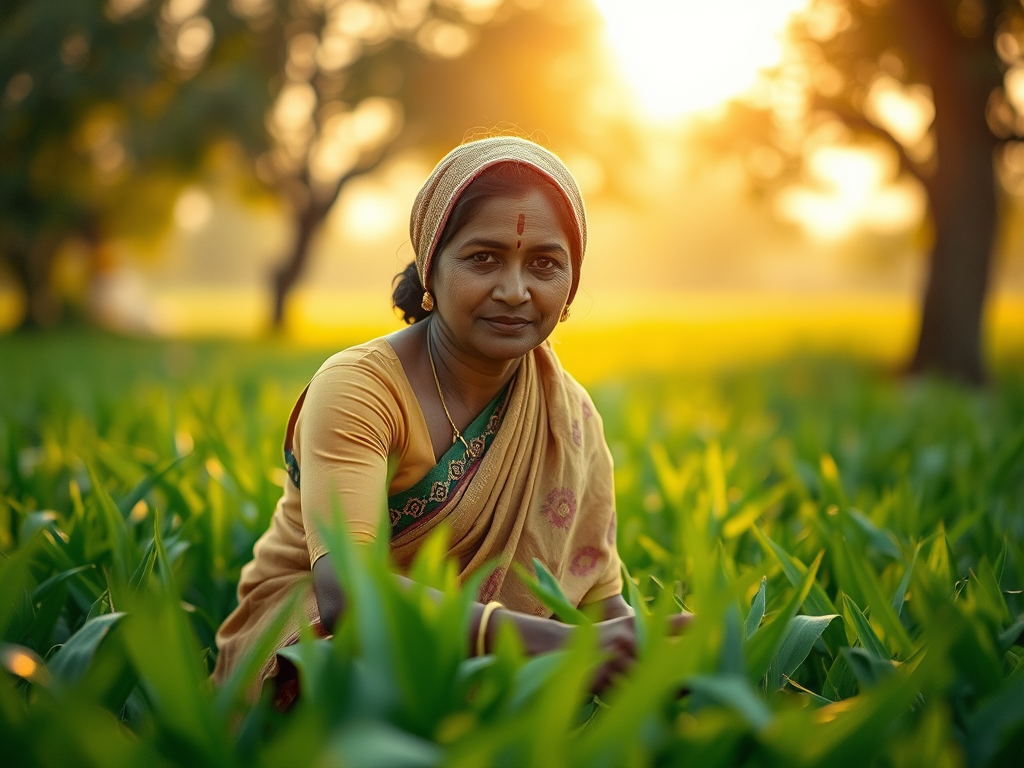
“Farmer” – the image that comes to one’s mind when one hears that word is almost always a male agricultural worker toiling in his farmland. But that image is far from today’s reality.
India’s Female farmers are the unsung heroes of the country’s agricultural sector. In many parts of India, particularly due to male outmigration to cities and due to men getting employed in the rural construction sector, agriculture is becoming increasingly feminized as women are taking on more agricultural responsibilities
However, their contributions are often overlooked and face significant socio-economic challenges. Despite their involvement, female farmers tend to have less access to resources, land ownership, and decision-making power compared to their male counterparts.

Here’s an overview of the situation of women farmers in India:
Role of Women in Agriculture
- Major Contributors: Women account for more than 75% of full-time agricultural labor in India. They are engaged at all levels of agricultural value chain; from production and preharvest (sowing, transplanting, weeding, harvesting), post-harvest processing, packaging, marketing to increase productivity in agriculture.
- Involvement in Livestock and Dairy: Women are highly involved in livestock rearing and dairy production. Many women, contribute significantly to dairy farming and small livestock management.
- Subsistence Farming: In many rural households, women are responsible for subsistence farming or growing food for family consumption, thereby ensuring food security at the household level.
Challenges Faced by Female Farmers
Despite their contribution, women farmers face discrimination and marginalization. They are paid about 22 percent less than their male counterparts. Following are some major challenges they face:
- Lack of Land Ownership:
- Although women contribute significantly to agriculture, less than 13% of women in India own land. Land titles are predominantly in the names of male family members, which limits women’s ability to access credit, government schemes, and subsidies.
- Without ownership rights, women are often marginalized in decision-making related to crop choices, resource management, and income distribution.
- Limited Access to Credit and Financial Services:
- Women farmers face significant barriers in accessing institutional credit because they often do not have land titles or collateral.
- Microfinance institutions and self-help groups (SHGs) have emerged as alternatives, but these loans are usually small and insufficient for larger agricultural investments.
- Restricted Access to Agricultural Inputs:
- Women farmers typically have less access to modern agricultural inputs like high-quality seeds, fertilizers, pesticides, and machinery.
- Limited access to information and training on modern farming techniques further compounds their challenges, leading to lower productivity compared to male farmers.
- Lack of Recognition and Data:
- Women working on family farms are often considered “unpaid family labor”, leading to their contributions being undercounted in official statistics. This lack of recognition makes it harder for female farmers to gain visibility in policy discussions and reforms.
- Official agricultural surveys tend to focus on the head of the household, often overlooking the significant roles that women play in farming activities.
- Social and Cultural Barriers:
- Patriarchal norms often restrict women’s mobility and decision-making in agricultural practices. In many regions, cultural practices limit women’s involvement in farming beyond traditional gender-specific tasks.
- Women also face double workloads—balancing domestic responsibilities with farming activities—leading to physical and mental strain.
- Climate Change Vulnerability:
- Female farmers are particularly vulnerable to climate change impacts such as droughts, floods, and unpredictable weather patterns. Their dependence on rain-fed agriculture, coupled with fewer resources to adapt, exacerbates their challenges in ensuring crop productivity and household food security.
Government Initiatives and Support
- The Indian government has introduced several policies and schemes aimed at supporting female farmers, but the reach and implementation remain limited.
- Mahila Kisan Sashaktikaran Pariyojana (MKSP): This scheme under the National Rural Livelihoods Mission (NRLM) aims to empower women in agriculture by enhancing their skills, improving access to inputs, and promoting sustainable agricultural practices.
- Self-Help Groups (SHGs): SHGs and microcredit programs have enabled women to pool resources and access financial services, particularly in rural areas. Women Self-Help Groups (SHGs) in states like Karnataka, Kerala, Tamil Nadu, and Maharashtra have been instrumental in encouraging women to take on leadership roles in farming and related activities. These groups have facilitated access to financial resources and helped women market their products.However, the scale of funding is often insufficient for significant agricultural investments.
- The NAMO DRONE DIDI scheme : it is a Central Sector Scheme that aims to promote the utilization of drones in agriculture for the precise spraying of Nano fertilizers and pesticides with the emphasis on women’s engagement and their sustained participation in mainstream agriculture. The scheme provides financial support and specialized training in drone technology, equipping women with advanced skills that are increasingly valuable in modern agriculture
In addition, A National Gender Resource Centre in Agriculture (NGRCA), set up in the Department of Agriculture, Cooperation & Farmers Welfare, endeavours to engender policies and programs. There are also special provisions for women farmers under various national agricultural schemes.
Need for Gender-Sensitive Agricultural Policies
Despite this trend, policies and programs are often not gender-sensitive, leaving women with greater workloads and less support for modernizing farming techniques or increasing income. Following are some suggested measures that could empower female farmers:-
- Land Rights: Securing land ownership for women is essential for empowering them and improving their agricultural productivity. Government policies should prioritize land redistribution programs that ensure joint titles or women’s ownership of agricultural land.
- Training and Capacity Building: Women need access to training in modern farming techniques, climate-smart agriculture, and entrepreneurship. Extension services, often male-dominated, should focus more on gender-sensitive outreach.
- Access to Technology: Facilitating women’s access to technology, such as mechanized tools, mobile applications, and market information platforms, is vital for improving productivity and reducing the drudgery of manual labor.
- Market Access: Women farmers need better access to markets, including digital platforms that can help them sell their produce directly, bypassing intermediaries and ensuring fair prices for their products.
Female farmers in India are central to the country’s agricultural economy, but they remain marginalized in terms of resources, recognition, and policy support. Addressing gender disparities in land ownership, financial access, agricultural training, and market connectivity is critical to empowering women farmers and ensuring their contributions are fully recognized and supported. Gender-sensitive agricultural policies, increased government support, and community-driven initiatives are essential to improving the livelihoods of female farmers in India.
Some References:
 Ellenomics