
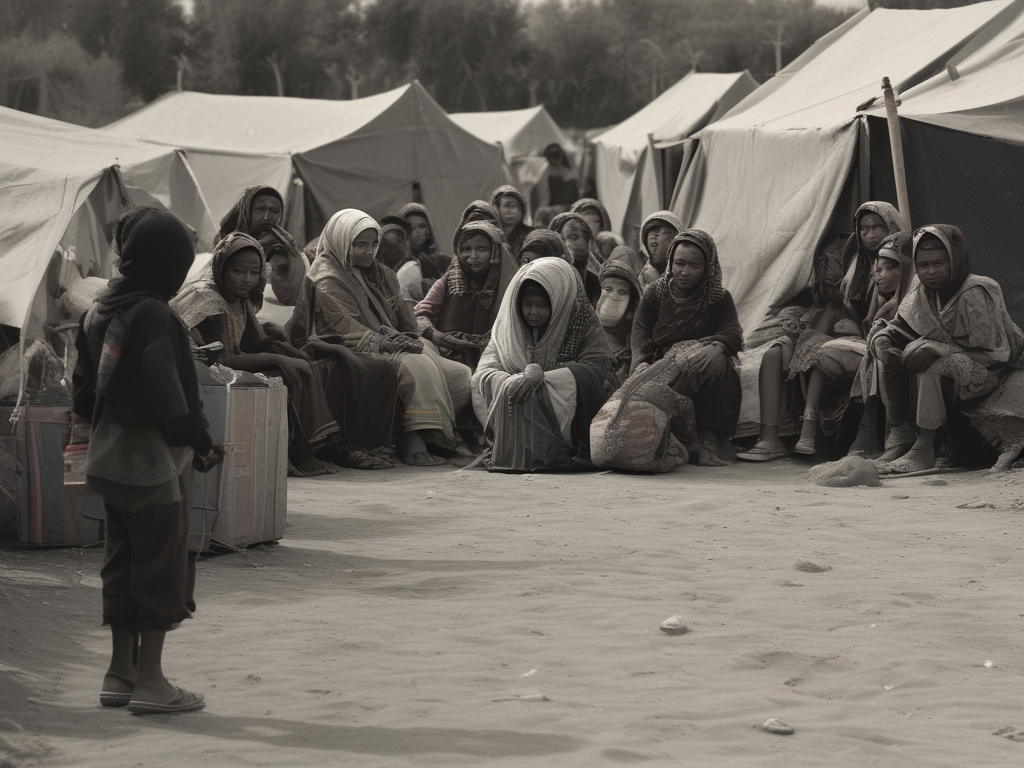
By Aanya Gupta
The world is facing political and human rights turmoil with conflicts and violence emerging in all parts of the world. While print and digital media have been reporting and highlighting the gravity of these situations from the perspective of international relations and political narratives; millions of masses affected by it have often been conveniently boiled down to facts and figures; and have been to take refuge in other countries against their will. UNHCR states that by the end of 2023, around 117.3 million people worldwide were displaced forcibly due to persecution, conflict, violence, human rights violations and events disturbing the public order. This number is expected to exceed 120 million by the end 2024.
It is crucial to examine the causes and consequences of international migration through a gender lens, especially when considering the experiences of women refugees. Gendered power dynamics profoundly influence their migration journey, shaping their vulnerabilities and opportunities. Understanding whether these women flee due to gender inequality or if the migration process itself exacerbates these disparities is essential. This knowledge is vital for developing policies and measures that effectively address the unique challenges and needs of women refugees.
The word ‘women refugee’ is defined as any woman who meets the eligibility criteria under the applicable refugee definition, as provided for in international or regional refugee instruments, under the mandate of the United Nations High Commissioner for Refugees, and/or in national legislation. However, the UNHCR mandate fails to include displacement due to natural calamities and omits a large chunk of the population from the minimal protection offered by the term ‘women refugee’
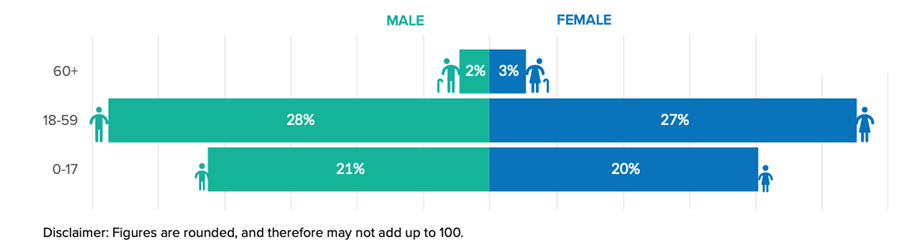
The statistics also reveal that women and children account for 49% and 40% respectively of the refugee population, making them key stakeholders in policy-making and welfare schemes. Women and children are also the worst affected with cases of gender-based violence and economic hardships highly prevalent in the demographic. Women have to face the burden of additional responsibilities from family and children as they navigate their lives in camps and refugee settlements.
Challenges faced by women refugees at different stages of displacement

Case studies of Victims
Amnesty International documented 14 cases of sexual violence committed by security forces, including seven cases of rape, committed against five women, a teenage boy and a five-year-old girl. Sexual violence took place at border crossings or in detention centres, during questioning. Testimonies are consistent with well-documented patterns of sexual violence and rape committed against civilians and detainees during the conflict by pro-government forces.
A Syrian refugee Noor was returning from Lebanon when she was stopped at the border by a security officer and was accused of being a terrorist. He further claimed that Syria was not a hotel and she couldn’t leave on her will. The officer subsequently raped Noor and her five-year old daughter in a small room used for interrogation at the border crossing.
Laila, an Afghan child refugee, was forced to clean homes for as little as 10-20 Afghanis a day ( US$0.10 to US$0.20), after her father was killed during conflict and her mother was going to be forced into another marriage. Shugofa, her mother, shared her sorrows as her five children went out to work and survived on bare minimum of one meal a day. She talked about how they cooked smaller quantities to avoid running out of food for the next day. ‘My children are weak and skinny’, she says. (source: savethechildren.org)
Economic Opportunities generated by women refugees
Even where refugee women are allowed to work legally, many face discriminatory norms and regulatory and administrative barriers. What would happen if refugee women worked and earned the same income as host country women and men?
The economic opportunities generated by refugees, particularly women, represent a significant potential for both host countries and global economies. Refugee women face unique challenges due to gender and social status, but their inclusion in the workforce can lead to substantial economic gains. A report by the Georgetown Institute for Women, Peace and Security (GIWPS) and the International Rescue Committee (IRC) highlights this potential, focusing on countries like Turkey, Uganda, Lebanon, Jordan, Germany, and the United States.
The International Rescue Committee finding is that if we close the employment and pay gaps for male and female refugees in these six countries alone could boost their GDP by USD $53 billion—five times the combined annual budget of the U.N. Refugee Agency and International Organisation for Migration.
Furthermore, refugee women’s contributions could be particularly impactful in countries with large refugee populations, such as Turkey, where their potential economic output could increase by a factor of 80, from approximately $140 million to $11.6 billion. However, despite the potential, refugee women are often employed in unskilled, undervalued, and informal sectors, earning significantly less than host-country workers. For example, in Jordan, refugee women earn just over $1 an hour on average, compared to over $4 an hour for host-country men and women.
To unlock this potential, the report advocates for regulatory reforms and policies that support refugee women’s access to decent paid employment, emphasising that closing the refugee gender gap benefits both refugees and host countries. The creation of a Global Refugee Women and Work Commission is proposed to drive this agenda, building on recommendations from the U.N. Secretary General’s High-Level Panel on Women’s Economic Empowerment.
This approach not only provides monetary gains but also offers broader benefits such as greater autonomy and opportunities for refugee women and their families. By addressing the barriers that hinder their economic participation, host countries can leverage the untapped potential of refugee women, driving economic growth and contributing to global prosperity.
Strategies to address challenges faced by women refugees
Women refugees face a unique set of challenges that require targeted strategies to support their successful integration into host countries. Addressing these challenges is crucial not only for the well-being of the women themselves but also for the economic and social stability of the host nations. Below are key strategies to address these challenges:
1. Increasing Awareness Among Policy-Makers and Service Providers
Policy-makers, front-line service providers, and professionals in the legal sector play a critical role in shaping the experiences of migrant and refugee women (MRW). Enhancing their understanding of the realities faced by MRW is essential. Training programs should be developed to increase awareness of the gender-specific challenges these women encounter, such as discrimination, gender-based violence, and cultural barriers. This knowledge will enable professionals to respond more effectively to the needs of MRW and foster their integration into the host society.
2. Promoting Access to Education and Vocational Training
Education and vocational training are fundamental for the empowerment of women refugees. Initiatives that offer language courses, skills training, and professional development are crucial in helping women integrate into the labour market. For example, Germany’s vocational education system has been instrumental in helping young refugees like Muna, a daughter of Somalian refugees, to gain employment in reputable companies. Expanding such programs can significantly improve the economic prospects of refugee women.
3. Supporting Mental Health and Well-being
Many refugee women have experienced trauma, which can impede their ability to adapt to a new country. Mental health support services should be readily available to help these women cope with past experiences and the stress of resettlement. Comprehensive health programs that include mental health care, trauma counseling, and support for survivors of gender-based violence are essential for their overall well-being and successful integration.
4. Enhancing Legal Protections and Rights
Strengthening the legal protections for women refugees is vital. Governments should ratify and implement international legal instruments that protect the rights of migrant women and girls. National migration laws should be reviewed and revised to eliminate discriminatory provisions. Additionally, legal literacy programs should be developed to educate women refugees about their rights and the legal resources available to them.
5.Improving Data Collection and Research
Effective policy-making requires accurate and comprehensive data. Efforts should be made to collect and use sex-disaggregated data to better understand the specific needs and experiences of women refugees. This data can inform the development of gender-sensitive policies and programs, ensuring that the unique challenges faced by refugee women are addressed.
6. Empowering Women Refugees through Community Involvement
Women refugees often contribute to their communities by participating in non-governmental organisations (NGOs) that advocate for gender equality and women’s rights. Encouraging and supporting their involvement in these organisations can amplify their voices and ensure that their perspectives are included in decision-making processes. Additionally, community-based programs that promote cultural integration and social cohesion can help women refugees build supportive networks and foster a sense of belonging in their new environments.
Conclusion
Refugee women worldwide face immense challenges, including displacement, economic marginalisation, and gender-based violence. Despite comprising a significant portion of the refugee population, their employment rates remain low, and when employed, they often face wage disparities and exploitation. Refugee women also endure severe physical and mental health issues due to violence and trauma both in their countries of origin and during their displacement. The lack of adequate support, safety, and access to essential services in refugee camps further exacerbates their suffering. However, with targeted interventions such as language training, mental health support, and policy reforms, refugee women can be empowered to rebuild their lives, contribute economically, and advocate for gender equality, benefiting both their host countries and their communities.
Information Source Links:
Extra Care For Migrant And Refugee Women, EC Factsheet (Link)
Women and Girls Account for the Majority of Migrants in East and Horn of Africa: IOM Report (Link)
Women And International Migration, United Nations (Link)
Migration Data Portal (Link)
The Integration Challenges of Female Refugees and Migrants: Where Do We Stand?, CESIFO (Link)
Journey of Violence: Refugee Women’s Experiences Across Three Stages and Places, Journal of International Migration and Integration (Link)
UNHCR Global Trends Report (Link)
 Ellenomics