

This research brief provides a framework for empowering women with sufficient, well-maintained, inclusively designed, and fully equipped toilets at homes, schools, workplaces and public spaces.
The “availability” of toilets for women, although much improved, is not the only concern for women. Using dirty and unhygienic toilets or not being able to change sanitary products for too long can increase the risk of infection, while not washing hands after changing menstrual products can help spread infections. The lack of hygiene and sanitation has been responsible for a large share of infant and maternal mortality, school drop-outs in girls and loss of productivity in women.
Therefore, an assessment of the extent of gender mainstreaming of toilets needs to be looked at through multiple dimensions, including availability, accessibility, design, maintenance/hygiene, safety, features and facilities. These parameters must be captured while building toilets in various spaces where toilets usually must be located.
A clean, hygienic, lockable, gender-segregated space is needed, with access to sanitary products and disposal systems, for women and girls to manage menstrual hygiene and pregnancy – United Nations
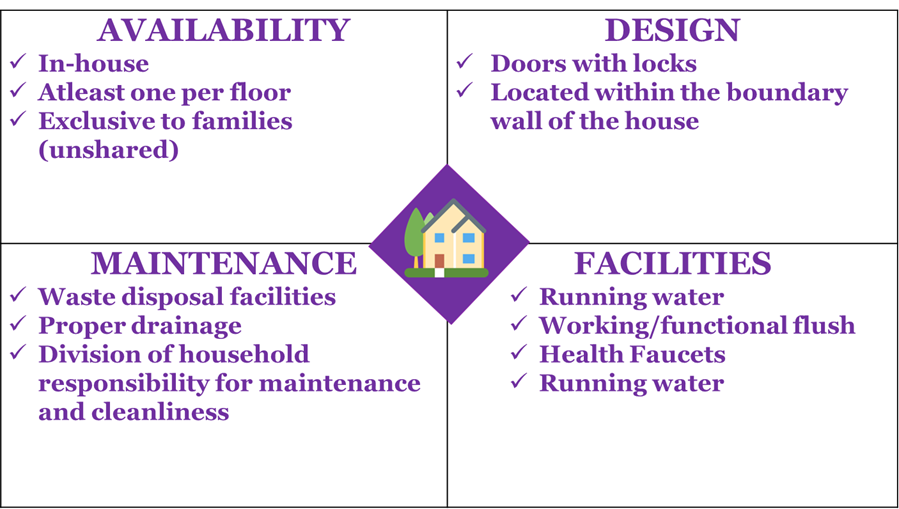
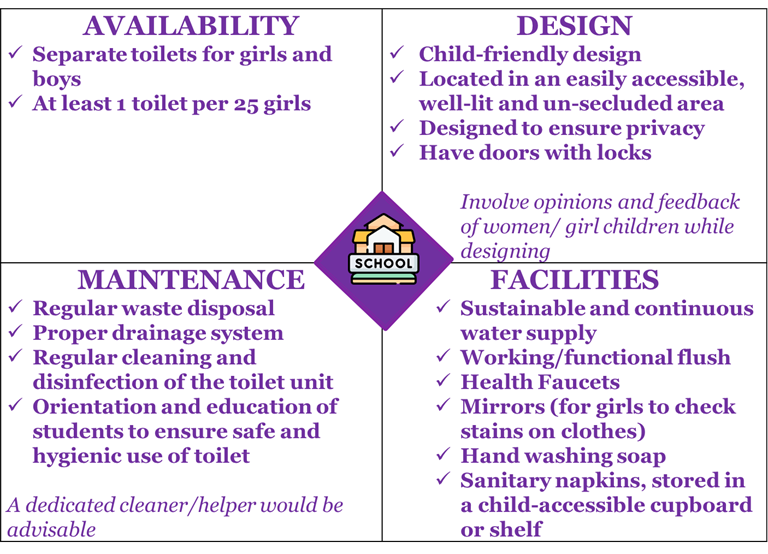
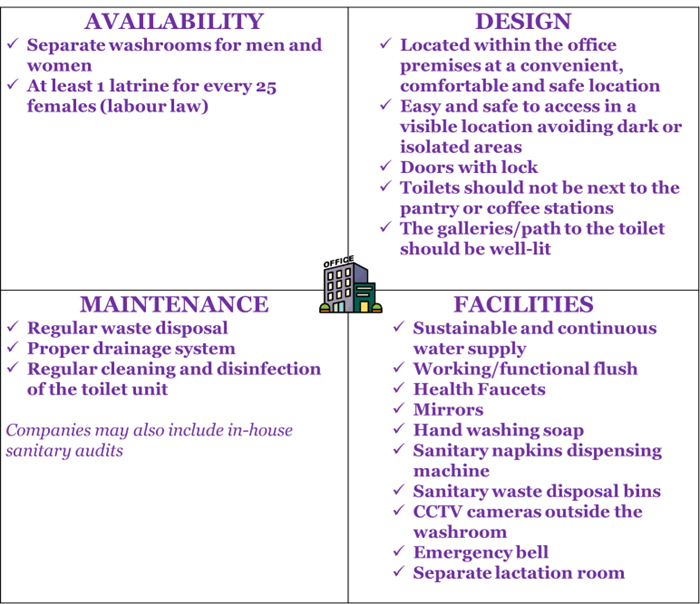
This paper presents an overview of the status of gender inclusion in toilets in India’s homes, schools, public spaces, and workplaces; and provides a framework for making toilets inclusive by incorporating various dimensions around four parameters – Availability, Maintenance, Facilities and Design.
4-PILLAR FRAMEWORK FOR BUILDING GENDER-INCLUSIVE TOILETS

Authors
Eshika Goyal
Shravani Prakash
 Ellenomics