

When we entered 2023, we could see clearly that humanity had finally begun to acknowledge that a gender-imbalanced world is not sustainable, and there were signs that women were beginning to finally shine in the male-dominated world. But 2023 may just go down as THE year that has ignited the engines of “women-led” growth. However, at the same time, 2023 will also go down in history as one of the years where we have let women down, and we are still miles away from achieving the goals under SDG5 (gender equality).
Here are some things that happened in India and around the world, that we’d take away from 2023 into 2024 and beyond:
India changed G20’s narrative around women, but will have to put its words into actions– India not only successfully hosted the G20 under its Presidency in 2023 but made it official that now we need to shift the narrative from “Women-development” to “women-led development”. This has set the tone to bring gender into all mainstream conversations about growth and development. But it is yet to be seen whether commitments finally get implemented into actions or not.
Women’s low labour force participation got official recognition, but must now be seen as a core macro-critical issue – Claudia Goldin’s Nobel Prize in Economics has finally given an official acknowledgement of all the gender differences in labour markets and made people take note of the gravity of the situation. But it has also stirred up conversations as to why her predicted “U-shape curve for female labour force participation” has not yet shaped up for India – why have more Indian women still not started working despite the increase in the country’s wealth? The perplexing question remains as to why, despite being the fastest-growing economy, India has such persistent gender gaps in women’s participation in the labour force?
2024 will be an opportunity to increase women’s leadership in policymaking, after 2023 set the stage –2023 was historic for India as we finally passed the Women’s Reservation Bill, to ensure that women occupy at least 33 per cent of the seats in state legislative assemblies and the Lok Sabha. However, the Bill is unlikely to be implemented before the 2024 elections, so for now political parties will have to demonstrate their intentions by their own actions. Currently, only about 14% of Lok Sabha legislators are women, far below the global average of 26.5 per cent and the 30 per cent representation required by UN to make any difference. It still more sobering to note that we only have one female State Chief Minister.
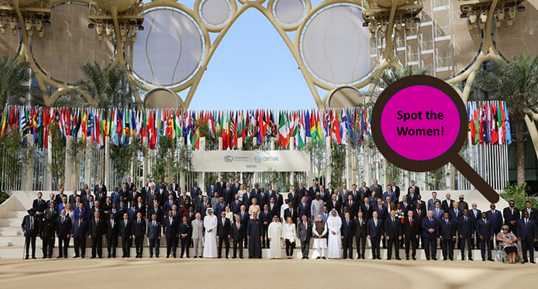
In fact not just India, but more than 70 countries, together home to more than half the world’s population, will hold elections in 2024. One will have to wait and watch whether that changes the gender imbalance of global leadership. Currently, for example, we have just two women Heads of State at the G20. Women’s representation in leadership remains low and was low at key international events, including G20 in India, COP28 in Dubai and UN General Assembly meeting,
Workplaces are enabling women with flexibilities, but still need to bust age-old myths – In their efforts to retain talented women, this year saw many Indian companies bring out policies to enable new mothers. Like Citibank India launched Work-from-home option for 12 months post maternity leave. Mahindra and Mahindra launched a 5-year maternity policy. However, workplaces have yet to realise that giving these flexibilities only to women creates unconscious bias in favour of people with higher “face-time”, and its performance appraisal standards of companies that will also need to change in the coming years. Enabling fathers with flexibilities and paternity leaves is equally important. And as Mckinsey and Lean In’s annual workplace study points out, there are several such myths that workplaces will have to debunk to truly enable women.
Conversations around menstruation are now out in the open, but not much respite yet for women – the Government came out with a Draft National Menstrual Hygiene Policy, which proposes to make menstrual health a a multi-stakeholder responsibility. However, whether or not to give women off-days to deal with PMS and period trouble became a major subject of debate this year. Is it a “disability”? is it an additional cost of hiring women? will it increase the bias against hiring women? will women misuse the leaves? Well, the debate will remain open in 2024 and beyond, until the time people realise that it’s the employers/workplaces that need the talent women bring to the table, and the costs of giving them time off to deal with discomfort is far less than the cost of losing out on the talent.
2023 brought out visible female role models for women in different fields from around the World, and 2024 promises to carry on the trend –
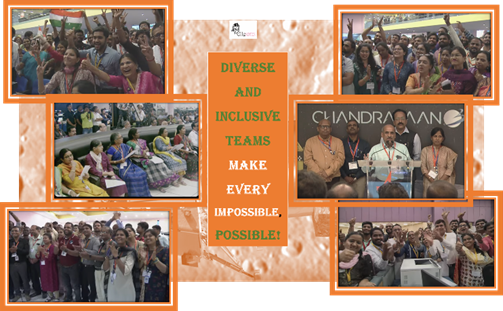
- India’s “Rocket-Women” – While the world celebrated the successful launch of Chandrayan 3, it was heartening to see the number of women scientists who were part of ISRO’s teams that made the space mission happen. The visuals were truly inspirational and will make girls and their parents believe that women can “aim for the moon”.
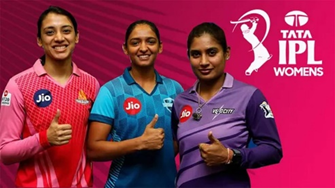
- Women in Cricket – Continuing the recent trend, Indian women in sports made several strides. Women won almost half of the historic 107 medals at the Asian Games. The 1st ever women’s IPL was held in March 2023 and was a huge commercial success. Indian women’s cricket team made history with first ever women’s Test victory over Australia. Vrinda Rathi made history as India’s first woman Test umpire. As a result, we see many more girls playing cricket and sports, and being encouraged by their parents to break stereotypes.
- Taylor Swift – “Swiftonomics” is not only buffering a large part of the US economy, but Taylor Swift has become quite a role model for young girls to believe in themselves and live their dreams. Taylor Swift became a billionaire in October 2023, thanks to the earnings from her Eras tour and the value of her music catalogue. Swift is the first musician to make the ranks solely based on her songs and performances.

- Barbie – Barbie’s Director Greta Gerwig became the first female director in history with a billion-dollar film. The film brought out powerful messaging against patriarchy, and made Barbie from a doll to feminist icon. As per Forbes, “Barbie has taken over the world” and the movie has been dubbed a feminist milestone because of the messaging -Because if Barbie can be anything, women can be anything’. Women have related to America Ferrera’s monologue about the impossible standards set on women.
- Women winning Nobel Prize – 2023 has been a record as 4 women won Nobel prizes – Claudia Goldin for Economics, Narges Mohammadi for Peace Prize, Anne L’Huillier shared the Physics prize and Katalin Kariko shared the medicine prize. Women can now believe that their work does have a chance to make a difference and to be acknowledged
However, there is a lot that also happened to show we’re far from an Equitable World:
-x While women continue to get less than an equal share of the “good stuff”, they still bear a greater brunt of every crisis that happened around the world. It was completely disheartening to hear stories of assaults on women in India’s Manipur or to see that the majority of people killed in the Israel Gaza conflict or the ongoing Ukraine-Russia war are women and children. In fact, women are suffering in several humanitarian crises going into 2024, with no respite in sight.
-x Women continue to bear the brunt of climate change to a much higher degree.
-x Domestic violence against women is at an all time high. Yet women are not getting justice when they report against violence and sexual abuse.
-x Women entrepreneurs are shining bright in India and globally; but the sobering reality is that funding for women -led enterprises plunged in 2023 as compared to the last year.
Therefore, in 2024, we together need to build on this progress, and also urgently address the underlying biases and patriarchal norms that victimise and disempower women. We need to find ways to “fast-forward” gender equality so we don’t have to wait 150 years to make the world a harmonious space to live in.
Unless we take real, heart-felt actions and not just “good-to-have” superficial, knee-jerk reactions, we will end up taking two-steps back for every leap forward women make.
 Ellenomics
Some of the major highlights of women’s achievements in 2023 have been covered well. It would have been interesting to know how much progress, if any, was made by the author as a woman, at a personal level, during the year.
Very comprehensive and non biased!