

Sarah Abraham, B.A. Honours Economics (2024), LSR
We shift from one fashion trend to another within split seconds! The influence of culture and trends knows no bounds. While we seemingly live in a fast-paced world, the fastest-moving of them all happens to be the fast fashion industry.
Take, for example, an increase in the presence of hot pink clothes in the days leading up to the premiere of the Barbie movie, a trend that’s now completely faded away!
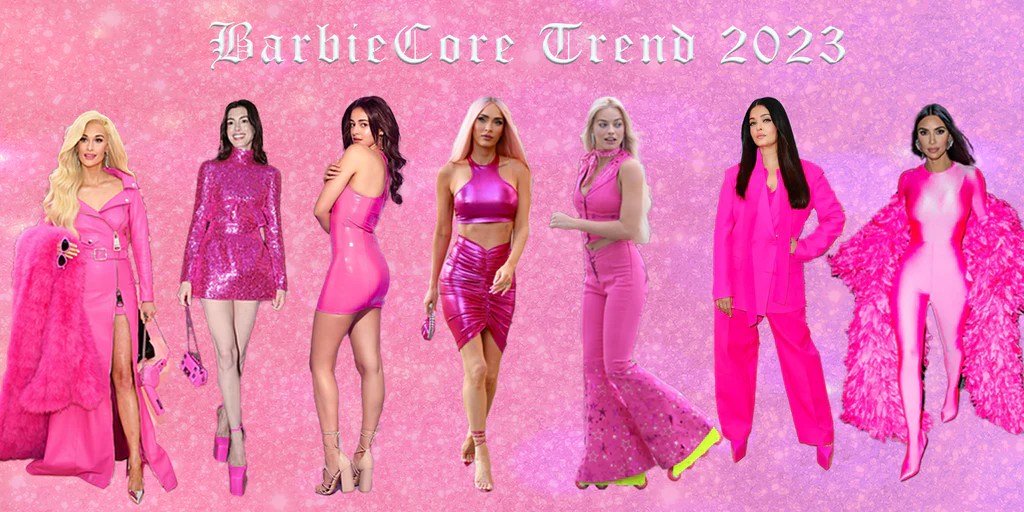
Image Source: Nolabels
This is a classic example of “Fast-fashion”, which has become synonymous with the contemporary fashion industry. Most of the apparel we buy and wear is from fast-fashion brands.
The New York Times describes fast fashion as “cheap, convenient, and consumable” – what I’d like to refer to as the 3 C’s of fashion.
The business model of fast fashion involves planned obsolescence, which refers to the practice of planning and designing products with an artificially limited useful life, so that it becomes obsolete after a certain period. While the traditional fashion industry has two collections annually, the fast fashion industry is characterized by 52 mini collections. In simple terms, a new collection every week. Take a look at any high-end fashion store you frequent; you won’t see the same clothes week after week. In a society where fashion trends and preferences are continuously changing, mini collections help companies capture the market and make a quick buck.

The biggest push for fast fashion has, undoubtedly, come from the influence of social media. Living in a world of interconnectedness, the transfer of ideas and thoughts is facilitated by the internet. With the presence of online platforms such as Instagram, Snapchat, and TikTok, it is no longer the retailers that hold power. It is consumers that yield all power in the fashion industry. With a constant change in consumer preferences, brands have to keep up to ensure that they aren’t missing out on a sale.
Women are among the biggest consumers of fast-fashion. However stereotypical gender roles make women susceptible to being exploited as garment workers in the fashion industry as well as to being held responsible for its negative implications as the primary consumers of fast fashion.
Therefore, it is important for all women to really understand the pros and cons of fast-fashion, how their fashion choices can have negative repercussions, and what women can do about it.
Fast-Fashion’s Impact on Sustainability
For that, let us begin by understanding the concepts of supply chain and sustainability. Fast Fashion thrives on the quick delivery of apparel to satisfy consumer demand, which in turn affects the supply chains of the company. According to Investopedia, a supply chain is a set of steps that are involved in getting a finished product or service to its customer. From procuring raw materials to storing, processing, and transporting, every step of this journey forms the supply chain.
Fast fashion has made suppliers subject to more pressure due to changing consumer demands and leads them to compromise on the requirement of the supply chain to be “sustainable”. A sustainable supply chain is one that fully integrates ethical and environmentally responsible practices into a competitive and successful model. Harvard Business Review highlights how a supply chain can only be sustainable if all its supply tiers are sustainable. That is, it’s level 1, level 2, and level 3 suppliers that need to be sustainable.
An example of this relationship between sustainability and fast fashion can be illustrated using the example of H&M.
H&M’s Fast Fashion and Ethics
| The Swedish fast fashion giant Hennes and Mauritz, more commonly known as H&M, entered the Indian market in 2015. Needless to say, the company created a storm in India by giving access to international apparel at reasonable prices. With 51 stores in India and plans to add six more by the end of 2023, along with expanding on Myntra, H&M has curated its presence online as well as offline. With the launch of its homeware brand, H&M Home, in 2022, the brand has become a go-to for all fashion enthusiasts. Upon analyzing the annual sustainability report (2022), a common trend of moving from a linear to a circular production trend was identified. The company claimed that it is focused on creating apparel that will eventually be recycled into new clothes. Establishing a reverse supply chain—moving clothes from customers to producers—will also help aid their goal of a circular production chain. It was reported that 84% of the raw material used by the company was recycled, in line with their target of achieving 100% recycled material by 2030. The company also reported that it has increased its investment in environmentally conscious that use recycled materials to produce specific fabrics. H&M also said that it has implemented a SIPP (Sustainable Impact Partnership Programme), which focuses on ensuring and identifying that each stage of their production supply chain is abiding by the metrics identified by the company. However, in 2022, H&M found itself amid a scandal where the brand was accused of greenwashing, i.e., falsifying claims of being environmentally conscious and eco-friendly. H&M had scorecards depicting the environmental impact of each of its products. However, a probe into this system of scoring revealed that the company was inflating these scores. It was also found that the company advertised its Conscious collection as being more water-conscious than it is, which is ironic considering the very name of their sustainable range is – Conscious. Ever since the scandal, H&M has stopped using these scorecards and has made claims of heightening its focus on sustainability. |
There are several negative repercussions of practices followed by companies like H&M and others to produce fast fashion, which we all must be made aware of –
Compromised Quality: To meet the growing demands of the people, the industry is focused on producing clothes at lightning speed. The quality of the materials used in production comes secondary to meeting quantity requirements. Brands have adopted the idea of quick production for a quick sale, leaving questions on quality and standards unanswered.
Environmental degradation: As the name suggests, Fast Fashion is a way to get your hands on the latest fashion trend. Most of the production for these brands occurs overseas in countries that have low labour costs, such as Bangladesh. Once produced, cargo is shipped by air, adding to the growing carbon emissions on the planet. Furthermore, fast fashion thrives on the growing consumerism among people. YouTube “Get Ready With Me” videos and reels on shopping hauls perpetuate the need to buy in excess. Once bought, clothes are barely worn before they are tossed aside for the next pair of jeans. These clothes invariably find themselves in dumps, where they eventually become waste. The fashion industry generates 92 million metric tons (BBC) of textile waste annually. This waste is predominantly made of materials such as nylon and polyester, which are not environmentally friendly.
Fast-Fashion’s Negative Impact on Women
The fast-fashion industry not only harms the environment but also has a negative impact on women, who form the majority of the producers (work-force) as well as consumers
Detrimental impact on female workers – Most of these fast fashion brands in their quest to cut costs and scale profits, follow several unethical practices. They have been accused of underpaying, overworking, and exploiting their laborers. Given that the majority of workers employed in the garment industry are women, these unethical practices of the fast fashion industry disproportionately impact women. The factories in which fast fashion clothing items are manufactured have dangerous working conditions for the workers. Many of these factories are essentially sweatshops, and the garment workers who are trapped, as a result of gender construction in their culture, into working for them are mainly women. Additionally, it was brought to light that H&M was severely underpaying its female employees, which in turn led to an increase in the violence and sexual harassment they faced at the workplace.
Unjust impact on women as consumers – The fashion industry has been highly feminized as the consumers of fast fashion as primarily female. It was the women’s fashion sector that was accelerated first and women have traditionally been pressured by sociocultural norms to be concerned about appearance, fashion, and beauty. Women also tend to be lured more into purchasing clothing than men. Even as consumers, therefore, it is women who suffer from the harmful implications of the fast fashion as they have unjustly been held responsible for the evils of fast fashion.
What can women do to address the harmful effects of fast fashion

With an increase in global awareness of topics such as sustainability, the sustainability practices marketed by companies need to be checked. Interest groups must lobby for an increase in transparency and must rally for big fashion houses to mandatorily integrate sustainability metrics as a key factor in their agendas. While companies may advertise themselves as “conscious,” it is important to validate their claims and increase their accountability. A company’s value proposition shouldn’t be solely cantered around their clothes; being environmentally conscious should also be just as important.
However, given that women are at the target consumers of the fast fashion industry as well as the biggest recipients of its harmful effects, there is a lot that women themselves can do to redress the social and environmental effects of fast fashion. Specifically, women can do this as consumers but also as responsible changemakers who can help change the lives of female garment workers.
As consumers, women can take the following kinds of action –
- Buy from sustainable and ethical fashion brands
- Shop locally
- Buy high-quality, long-lasting pieces of clothing
- Buy less!
- Prioritise quality over price
- Discard less, repair, and reuse more
- Rent or borrow occasional wear clothes
- Promote “Circular fashion” over fast fashion
- Donate unwanted clothes
As changemakers, women can do the following:
- Spread awareness and flag the ills of fast-fashion to everyone in their networks
- Be vocal and join campaigns against fast-fashion brands, to compel them to become ethical in real
- Support local women garment workers’ labour unions in any way possible
Bibliography
https://www.netsuite.com/portal/resource/articles/erp/supply-chain-sustainability.shtml
https://www.thecut.com/2022/08/h-and-m-greenwashing-fashion.html
https://openjournals.uwaterloo.ca/index.php/jirr/article/download/1624/2092
 Ellenomics