Government Policies are needed to address patriarchy that prevents educated Indian women from working

A new research paper by leading policy think tank ICRIER has quantified the negative impact of patriarchy on the participation of women in the economy despite high levels of education.

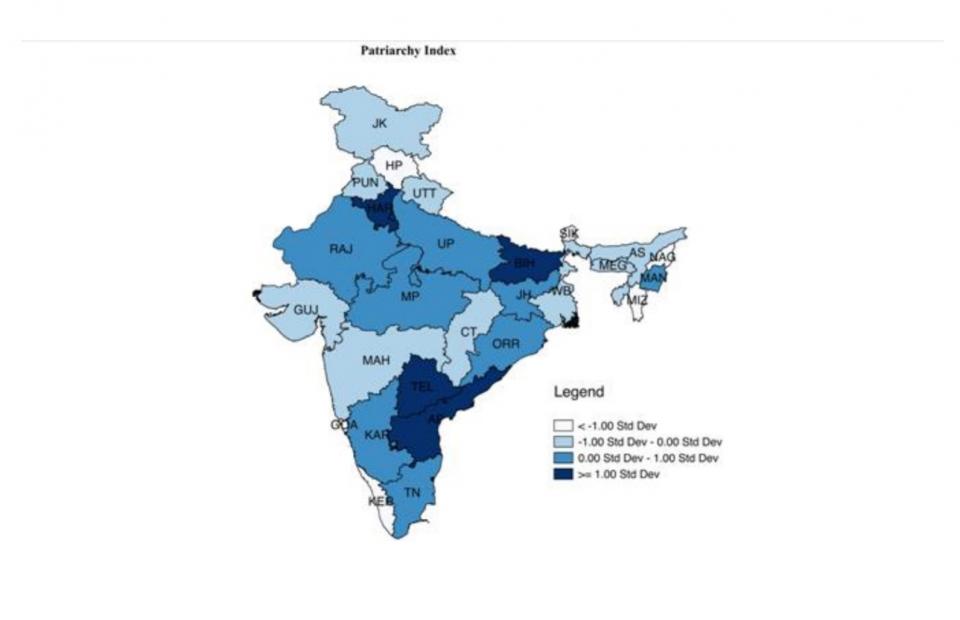
The paper constructs a state-level “Patriarchy Index” that quantifies social and cultural norms using like low child sex ratio, low participation of women in household decisions and high spousal violence. Higher values of the index are indicative of higher levels of patriarchy in the state.

Analysis of the index shows:

  • States with high levels of patriarchy are also states with high proportion of women out of the labour force with graduate degrees and above.
  • The commonly cited “North-South divide” that demarcates areas of strong discrimination (northern states) from those with greater gender equality (southern states) may not really hold true. For instance, the southern states of Andhra Pradesh and Telangana fair equally badly as states like Haryana, Delhi and Bihar.

Education in the current form alone might not be sufficient to spur growth in female labour force participation rates in India. Along with focus on female education, the government schemes must also target the cultural and social forces that shape patriarchy and thus, facilitate behavioural changes that are conducive to the acceptability of female employment.

Some of the potential policy responses that were identified were:

  • formulation of multi-stakeholder interventions that promotes gender equitable norms leading to acceptability of female employment
  • implementing policies that reduce the time burden of women on domestic duties and care responsibilities
  •  creating employment opportunities through quotas and government programs
  •  encouraging greater participation of women in public administration
  • adopting legal reforms to dismantle “protective legislation”

Government Policies are needed to address patriarchy that prevents educated Indian women from working

A new research paper by leading policy think tank ICRIER has quantified the negative impact of patriarchy on the participation of women in the economy despite high levels of education.

The paper constructs a state-level “Patriarchy Index” that quantifies social and cultural norms using like low child sex ratio, low participation of women in household decisions and high spousal violence. Higher values of the index are indicative of higher levels of patriarchy in the state.

Analysis of the index shows:

  • States with high levels of patriarchy are also states with high proportion of women out of the labour force with graduate degrees and above.
  • The commonly cited “North-South divide” that demarcates areas of strong discrimination (northern states) from those with greater gender equality (southern states) may not really hold true. For instance, the southern states of Andhra Pradesh and Telangana fair equally badly as states like Haryana, Delhi and Bihar.

Education in the current form alone might not be sufficient to spur growth in female labour force participation rates in India. Along with focus on female education, the government schemes must also target the cultural and social forces that shape patriarchy and thus, facilitate behavioural changes that are conducive to the acceptability of female employment.

Some of the potential policy responses that were identified were:

  • formulation of multi-stakeholder interventions that promotes gender equitable norms leading to acceptability of female employment
  • implementing policies that reduce the time burden of women on domestic duties and care responsibilities
  •  creating employment opportunities through quotas and government programs
  •  encouraging greater participation of women in public administration
  • adopting legal reforms to dismantle “protective legislation”